Tuesday, September 22, 2015

A Treatise on Digital Reality

__________________________________________________________________
I.

Our digital future is already happening. A recent study concluded that 127 new objects a minute are being connected to the "internet of things." Thats a lot of stuff. I don't know why my mattress needs a wifi hotspot, but ok, maybe more people will connect on it.

TechCrunch predicted recently that AR/VR could hit $8.5 billion by as soon as 2018, $150 billion revenue by 2020, with AR taking the lion’s share around $120 billion and VR at $30 billion, as well as playing a similar role to mobile across sectors, eventually replacing it. A Forbes market analysis suggested that VR/AR will be the dominant global market from 2020-2050, a larger and longer market position than both mobile/smartphone markets and the internet itself had. With few exceptions, technology companies are putting money behind the future of virtual reality. Make no mistake, within the next decade we will witness and be a part of the largest technology revolution since the microprocessor itself, a revolution that will shape many aspects of our future. That being said, let us continue without further hardware specs, demographics or statistics. I would like to focus our attention on several less defined, more esoteric aspects of our future digital reality.

When you read about VR now, almost all of it is focused on hardware. If you do a search for VR, you will find pages full of shiny space goggles, each trying very hard to convince you that they are the future, that they are what VR is about. Yet for almost a decade when I describe my career in SL to someone, the only effective way I have done so is to label it as some form of virtual reality, "I am a virtual reality designer" or "I make and sell virtual furniture inside a virtual environment." In my mind the VR boom has already happened to me, and to all of the SL community. We are already here and have been here.
_________________________________________________________________________________

There is a long way for us to go. It is a lot easier to sell VR to consumers with a picture of shiny space goggles than by showing them screenshots of a UI or describing bits of code. The HMD (head mounted display) is the trend now, not the software that needs to be created in order to put a headset in every home. Yet in order for VR to thrive and grow it must become the focus. Hype be damned, in the end word of mouth is what will likely drive consumers to purchase an HMD, which is a bit of a problem.

I spent most of 2014 outside of SL in my real life near Seattle, much of that time studying and researching, learning everything I could about virtual and augmented reality. After all that time I still have not tried a single piece of VR hardware even though I live about 20 minutes from where most of it is being made, which highlights an early problem of adoption: You can't fully understand what it really does until you sit down and put it on your head. On the other hand, I have spent almost 20K hours logged inside a virtual environment since 2006, immersed there without ever having put on a headset to do so. My point is, the SL community already has a deeper understanding of virtual reality than pretty much everyone else on the planet. The coming flood of virtual headsets will simply allow us to access it in a new way and hopefully open the door for a bunch of the rest of the world to do so too.

Let's face it, many of us won't wear a headset all the time or possibly ever, even when they become affordable and fully developed, which is years away. Rather, they will become one option of many to access content, along side the phone, tablet, laptop, PC and TV. At first the hardcore gamer is most likely to adopt the HMD as it will offer the best experience for playing games, but that will not diminish people who play games on a phone, do spreadsheets on a laptop or make 3D content on a desktop. HMD's are simply peripherals, NOT virtual reality but a way to access it.

• The process of VR is an attempt to mimic the experiences you would/could have in the physical world using video, audio and 3D content viewed through a HMD from the perspective of being there. It's about immersion in a new environment after separating yourself from another, most often by enclosing your view and providing new imagery through a combination of lenses and phone, LED or OLED screen.

• The AR process adds virtual elements over the geometry structure of a pre-existing real or virtual environment through a HMD that may or may not block your view of what's around you. Within a full VR environment, AR elements can be overlay-ed on top of the virtual environment, like floating menus in a game. Other AR applications require that you continue to be aware of the real world by looking through some type of transparent lens or screen on which the imagery is projected so that it appears to follow the perspective of that space as you move through it. It is inclusive of the environment around you, combining new elements with what is already there, and as a result is designed to blend in rather than separate. It can be subtle or immersive in ways that enclosed systems aren't.

Each has strengths and weaknesses based on use and delivery, yet both will never extend beyond niche market status without the right applications to drive them.
_________________________________________________________________________________
II.

In a June 26 post from Maximum PC, Palmer Lucky said “You just don’t have the horsepower to make it happen on a device, much less a cheap enough and comfortable enough device that a normal consumer is going to want to have,” he said. “There’s going to be more diverse content. Right now, it’s almost entirely games, because only the games industry has the tools and the talent to make immersive 3-D worlds.” I guess that makes us part of the games industry.

Recently I spoke with Yuval Boger, CEO of OSVR @ Razor, asking that aside from the initial hype cycle and coming first round of consumer ready hardware, if the largest obstacle to overcome at this point was software? He agreed, saying that "content will be the deciding factor in who ends up on top. It is the old chicken and the egg scenario. The hardware will not take off if it offers a limited, passive range of experiences or becomes a wagon train of developers pushing one particular market, like gaming. Yet without maintaining a high consumer confidence by offering more and better experiences the hardware will not progress beyond a few initial releases." (consider the Nintendo virtual boy). The bubble would burst as it has several times since computers became a thing, and we will wait again on the promise of virtual reality.

Can VR be for everyone, the way the internet and smart phones have become? If indeed we end up with a rich variety of initial experiences, coming from the garage workshops and corporate research labs concurrently (which is the existing scenario), what will lead to the point where VR/AR becomes what most of us use for some portion of the time we spend online? Is there a "killer application?"

I believe that it is the one which is the most open ended, which can contain the most people and which provides the tools and opportunity for every user to make or aggregate, organize and access any content. That foundation is, considering the variety of what people will want VR for, the most logical conclusion, for a number of reasons.

After the initial consumer cycle and as the uses for all that hardware multiply there will be a need for open standards. They will be developed to facilitate inter-operability between not only various hardware types but eventually between the numerous software environments we support, gradually leaning more and more towards a unified metaverse. The various media, entertainment, education, experience and social applications will consolidate and centralize, not by origin (because everyone will be making everything), but by delivery as chosen by the user through hardware, platform, etc. A convergence of technologies will be handled by open standards, not controlled by any one company. Once they are established digital reality will begin to advance at a much faster pace, streamlining the process of hardware design, content development and distribution among multiple channels simultaneously. OSVR has taken the early lead with an open source hardware and software platform for this very purpose. Valve has also introduced the OpenVR platform for Steam.

Introducing a wide variety of digital reality hardware to the current gaming, video and social media markets will ultimately push people closer to something very much like what SL already does out of necessity, putting project Sansar into a very nice position to capture and possibly lead that market and putting resident business owners in a position to monetize on that trend in ways which are well ahead of the curve. Consider the 3D content market outside of SL; While there may be lots of buildings or household props on turbosquid, the majority of them are not designed for occupation or use by a family of avatars, many are just outer shells. Consider the existing marketplace and economy model in SL, the way we personalize our avatars or the variety of things we make; Any emerging virtual world must first understand those things from both corporate and user perspectives, then build those things from scratch. We have had a decade to refine them.

Whether on a tablet, a desktop, a console, a phone or a HMD, Second Life is only a portion of all the things we do online yet we will begin doing them in something similar to what project Sansar may become; Open virtual worlds are in the best position to fill the need for a place to do all those things as well as do all the new things which digital reality is going to offer. It is not about one game, it is not one platform, one place or one world but a framework for all those things to exist.

Ideally, the concept of a metaverse is the total of combined applications across various virtual worlds through the perspective of an identity which remains constant across all of them. The coming storm of digital reality will eventually produce a true metaverse, a new blank canvas which will be covered by the paint of humanity and its many colors. When they arrive, it is my hope that the community of Second Life will be there, waiting, to help them understand what to do with it all. Going forward it is imperative that we be there in order to share our experience and what we have learned, to preserve the foundation of community which we have so carefully crafted so that it can be incorporated into the future and kept from being lost. Therein lies a legacy and a destiny. As we begin the next chapter of our digital lives with Project Sansar starting this week, let us attempt to show the rest of the world our example. Let us lead them, not just be ahead of them. Let us light the path.

Those of us who have spent time in SL know what a tremendous, unprecedented thing it truly is. When you log in, It generally no longer matters if you are male or female, black or white, thin or thick, Amercan or Japanese, gay or straight, republican or democrat, furry or robotic. When those things are removed the world becomes a very different place. More often than not, my experience in SL is one where those things do not register. I know you only as you present yourself and by your actions, without preconception, judgement or social stigma. When the rest of the world has a chance to understand just what is possible within that kind of framework, as it eventually will, we will begin to see adoption on a much larger scale. When the rest of the world experiences society without cultural or national boundaries and the social stigmas associated with them, when they find out that those social stigmas do not automatically apply, the potential for cultural and societal change increases dramatically. We find, as humans, that we are all a lot more similar, that our differences are what make us special, that nation states and borders exist to create war and that as individual parts of the whole we can have an impact. Imagine if all the users of facebook could experience that kind of societal and cultural freedom from convention, the kind of connection that we get to experience every time we log in? In the entire history of the human species this social condition has not existed or even been possible, until now, until we logged in and made it that way. Such a social condition is a prerequisite for individual dignity and, in the words of Oscar Wilde, "presents the dawn of civility and grace in the coarse and rustic."
_________________________________________________________________________________

Our community has several huge advantages over those who have not experienced SL; We are years ahead of them all in understanding what it is like to work, play, live and love - to exist - inside a virtual environment. We know a great deal about what is required to craft our identities, about what people are willing to spend on things and what trends, about what connects us and disconnects us from the various experiences we have there, what works and what doesn't. We have been given the framework and conditions we need from the benevolent dictators of our governing corporation in order for the community to thrive and us in it to prosper.

Most important of all, however, is that we have US - a global community of intelligent, creative, inventive and resourceful users that exists no where else. As a talent pool and a workforce there is no single entity which can compete. We are the only community of our kind, with the mindset that is required to shape our world into what we want. Remarkably we did this in almost direct opposition to the initial intent of the Lindens. It has lasted longer, grown larger and become something completely different than what they intended when they made it. We have created a completely new economy and radically different ways of marketing our goods and services that defy pre-existing methods. We defined what this is.

The only other places that are experiencing something even remotely similar are the game development platforms like Unity, Crysis and Unreal which, while growing in popularity, still lack several key elements that we already have, such as a unified space for distribution and actual play/experience. The relatively new marketplace for these environments, while similar to SL, is considerably smaller in size, revenue generation and has no currency system. Better still, they have almost no awareness that this vast resource of talent and experience even exists. We have the element of surprise.

As we did with SL in the past, those people immersed as a virtual community now will have a great deal to do with what ends up becoming the metaverse. Within that foundation of community, the user base has thrived through individuality and the focus on identity. The ability to craft that identity is a primary psychological motivator, as we have experienced in SL. The lack of that ability is a primary detractor, as we have seen with BlueMars and Cloud Party. We really like to make us us. It is that very sense of being at the center, of crafting that base identity and the world around it which will eventually require that we extend that base to include not only all the new forms of technology but to also redefine how we use the existing forms. The revolution will be personalized. We become the center, and more and more the things we do online will be centralized to that identity (or identities), whether actual, fabricated or both. Facebook, movies, live music, work, web surfing, gaming, hanging out with friends will all become things which can be done within our personal virtual environments, or overlay-ed onto our real ones.
_________________________________________________________________________________
III.

While we go forward the temptation will be to tread the familiar paths, reproducing what has worked for us in SL. While this is a necessary step, more interesting and significant are the things which are only going to be possible through the confluence of the new technology being developed, the right broadband speeds and the right number of people. Things will happen in such a way, at the right time and place, that open up opportunities for us to use the technology in ways that were, up to that point, not possible. This is exactly what happened in SL over time. We took the pieces and the tools and made it into something new and we did so over and over again.

Imagine something like SL combined with Unity and Steam, where the users actually make quality (playable) games, publish and provide access so that you play with your avatar and friends - all within the same environment. Log in, watch a movie, shop for a bit, go listen to some live music, and then all of you go play game X within the same environment. That is the nature of open virtual environments and in time it will become the nature of a true, working metaverse. Iteration is a critical aspect of that nature, and will emerge as newer and better hardware models and new and better ways to use them.

The most interesting aspect of this gaming scenario is not so much that users could make good games. Unity and Unreal prove that already happens, contrary to what Mr. Lucky may believe. The aspect which has not been explored is the difference between your SL avatar and the characters you play in current games: In most games, you have little to no emotional connection and do not identify with that character at all, aside from wanting it not to die. No one cares about being pacman, you want to eat dots and get through the maze. Your personal level of involvement is limited, even in the latest games where there is backstory and character development.

In SL, however, we spend inordinate amounts of time, money and effort to create our virtual selves. We identify with them, and with the avatars of our friends and loved ones. That dynamic alone presents amazing opportunities and it is one of the main aspects that people who have not been in SL miss completely. From the big studios down to Unity and Unreal game developers have little concept of this and do not incorporate it into their games, nor could they. But imagine playing Left4Dead with SL avatars. Saving you or your SL friend or partner from being killed takes on a very different dimension and level of emotional involvement, there is a much greater incentive to survive. You do not want your friend to be eaten by the zombie, they are no longer just player 2. Combine this with deeper levels of immersion from new hardware and you are in very new territory from a player perspective. If gaming is to be the initial driving factor for mass adoption as is the general consensus, then I propose that it is identity, our mastery of crafting them and that link between game and avatar which will be the driving factor in the best of those future games and experiences.

While current MMO experiences often involve groups or guilds of players, beyond the mission scope there is usually limited interaction, certainly not on the scale or depth that occur between SL residents. The personal impetus and psychological motivation factors incorporated into gaming will emerge in parallel with and contribute to better immersion than ever before, going beyond the normal range of sensory hardware into new territory - our emotions. No hardware can re-create that, but software will compel us to bring it with us. As many of us know, the moments which make our virtual world so special to us are the ones where the virtual and the real cross paths, that moment when the lines blur and our humanity shows through the veneer of pixels. In the world we have made, we live and work and love there. We exist there beyond the scope of our logins and logouts.
_________________________________________________________________________________
IV.

In closing, I would like to say something to those who make (or those that want to learn to make): Regardless of what the "killer app" ends up being for the future of our digital realities, whether that future lies on one world or within a true metaverse, it is apparent that the need for content is going to be greater than ever before, so much so that no single source or company will be able to provide it. Rather, it must be generated by a large portion of the user base, more than likely by everyone. This is an excellent time to be a content developer and the perfect time to learn how. The demand for 3D content is about to surpass the supply, and it will do so exponentially. Developers, coders, artists and craftsmen, we now find ourselves facing unprecedented levels of opportunity.

FiniS
.

Sunday, June 2, 2013

Materials: Much Ado About Nothing

"...They say materials are fair. ‘Tis a truth, I can bear them witness. And good to have—’tis so, I cannot reprove it. And useful, but for SL. By my troth, it is no addition to their function—nor no great argument of the lack of it, for we will be horribly in love with them."
                                                      -Shakespeare, kinda

By now the majority of us have become aware that materials - normal maps and specular maps - will become available as part of the main client soon and used inside SL. To elaborate on the specifics of what they are and how they work I will leave up to the plethora of sources already documenting those aspects. The goal of this post is to focus more on the more immaterial (pardon the pun) aspects of the application of this technology into our virtual lives and some things to consider about how they will most likely impact them.

Obviously, the fashion industry will, as with most new features introduced in the last 3 or 4 years, be at the forefront of taking advantage of it and pushing it forward into the spotlight of mass-adoption by the residents and other markets. This is a good thing and one of the wonderful consequences of such a dominant element in SL. You will most likely see it first on some article of clothing well ahead of ever seeing it on a house, chair or plant.

In the maelstrom of excitement about the advent of this fancy new shiny (literally) that the lab hath bestowed upon us, it is important to understand a few things about it that are not generally being spoken about but are worth considering. I am no voice of reason, but cannot help but notice that in all the confusion a few important aspects are being glossed over as sure as any specular map.

Yes, they will improve the look of things, or at least make things look different than they do now, much like sculpties and mesh did in their time. We will look back sometime in the future from an SL which looks perhaps vastly different than it does now. Things will be bumpier and shinier, if not more realistic.

As this is implemented, lots of people will be trying these features and releasing lots of new items that utilize the new maps. In the process, as with sculpties and particularly with mesh, much of it will be done simply for the sake of doing so. Much of it will also be done in an attempt to make things better, or look better. This is as it should be. In the mad rush to take advantage of what normal and specular maps can do, however, there will also be a considerable amount of overuse and misuse of them. Shiny for shiny's sake, if you will.

Simply look to the past implementation of a variety of features in SL and you see it happen again and again. Part of me knows that is just part of the process but part of me also hopes that it doesn't happen as much as I think its going to. Mesh items with ridiculously high polygon counts are still being produced in crazy numbers. LOD meshes and accurate rigging are still the practice of a small handful of the small handful of designers producing mesh on the grid.

There is a right way to go about it and a wrong way to go about it, both in how materials will be used by creators and by how the feature is being implemented by the lab. Unfortunately, there are already flaws in the system which have nothing to do with bugs in the code. Consider that normal and specular mapping are proven and established technologies that have existed outside of SL for over a decade. Many examples of how they can be created and how they can be used exist.

To be clear (and this is critical to understand):

Normal and Specular mapping was implemented as a way to render low polygon objects inside an environment in such a way that they appear to have much more surface detail than they actually do, in order to enhance the visual while maintaining efficiency of the models.
_______________________________________

The ideal process for using them goes something like this: A low polygon model is created. The model is then sub-divided (the shape stays roughly the same but is divided into many many more polygons). The low-poly model is kept. Very high levels of surface detail can then be added or sculpted using that high-polygon model, i.e. wrinkles, skin, folds, buttons, seams, cracks, etc. Once the model is finished in high detail a normal and specular map (texture) are created which save all those details. These maps are then applied to the low-polygon item inside your game environment. The rendering engine (in SL its windlight) then interprets the normals and specular details from those maps and renders them accordingly, making the low-poly item appear as if it has much more detail than it actually does. It is a cheat. A very clever, well designed cheat made to fool the eye into seeing lots of surface geometry that does not really exist on the actual model as anything other than a texture map. This is the most difficult method for creating and using normal maps, and will be the method which is, as a result, the least used in SL (at least initially).

There are, however, additional methods for using and creating materials which will be much more prevalent in SL. They can be generated based on an existing texture, which can be done almost instantly and efficiently by programs like CrazyBump and even Photoshop, producing a usable and decent addition to the detail of that existing texture in ways that enhance the appearance in world. Wood grain, bricks, stone walls are good examples. Materials can also be created as an all over, repeatable pattern which has little reference to the image texture used on an object and in fact can be completely different from that image. The water in SL, velvet or suede on a jacket are good examples of this method. They do not represent the texture or add specific detail to an object but do enhance the rendering of it.

Unfortunately material maps will be used in SL to add even more detail to already high polygon models, which is fantastic if you are rendering a movie scene or a high-detail still image but can be horrible for a game environment and even more so in a live virtual environment like SL. Take a look at the models in just about any popular game out there. None of them have on armor or corsets or hair or shoes that have 40k-50K polygons. Yet in SL, this is common. Less so on furniture and houses, as the land impact becomes a factor, but still prevalent on smaller items. Consider a sim crowded with avatars loaded down with high polygon mesh and surrounded by mesh items, like any of the recent large events or even the smaller monthly events. Performance is at a standstill. That world of permanent grey isn't going to render any faster when you add additional texture resources to that picture. That is a problem.

To be fair, LL cannot be fully blamed for introducing materials any more than they should be blamed for introducing mesh. BOTH are attempts to provide methods for us to build a better looking world that runs more efficiently than it did before. Ideally. They can, and should be blamed, however, for introducing those "features" in a way which only provides one at the sacrifice of the other. As we see with 1024 textures on nano-earrings and essentially unlimited polygon counts on attachments, the freedom to choose wisely is often abused in the race to provide better, more realistic items for the consumer who has been convinced to demand them. Prim equivalent limiting the use of rezzed mesh items but not attachments is something which should be addressed. They both, arguably, have an impact on the performance of both the server and the client.

For certain, a vast number of SL residents - perhaps even a majority - will not be able to even see materials. In order to do so "advanced lighting" must be turned on in your preferences, which is where enabling shadows also exists, something which requires a certain if not considerable amount of video rendering capability. Running it on even a powerful laptop is not something I would recommend. There are still people out there who cannot see mesh yet. All this being said,  the advantages, beyond the obvious visual ones, that this will provide for us seem rather insignificant.

Another aspect of the way that materials are being implemented which is ineffective concerns the lack of ability to adjust them once uploaded. Specular mapping has a variety of very cool ways in which it can be adjusted, particularly in regards to how it can also work with transparency. Normal maps do not. Once applied, they are on or off. This is problematic, though it will result in either a lot of temp uploads or a lot of upload fees for SL, neither of which is efficient. Let me explain why.

In the process of creating material maps, one of the key aspects is understanding and being able to see how they will work within a particular rendering engine under varying conditions. Granted, a specific amount of resulting quality can be expected when created properly. When uploaded and applied to a model in an environment, however, the results can often be different than expected. Different rendering engines produce very different results. What will work in one will often not work as well in another and must be adjusted and tweaked. In fact, the final results may often depend on that ability to tweak inside the environment. While working inside both Bluemars, which used the CryEngine, and now Cloud Party, which uses OpenGL, the specific look of materials on items I made often came about simply because I spent time messing with the settings, not something I could have predetermined. The varying windlight settings inside the many different regions of SL further compound the problem, something which generally does not happen in most video games, though the lighting may change.

This problem facilitates the need to make adjustments, the ability to increase or decrease the level or the specular and normal maps in order to get the desired result. When trying to create something like suede or velvet this is much more of a problem, as opposed to something much less subtle like leather or glass. On or off is not really ideal in terms of workflow for the creator, as it would require considerable uploading, editing and re-uploading of items in order to produce the desired result. Messing with things is not only critically important, its a fun part of the creative process, now removed. Why?

Perhaps the biggest argument during the process of implementing this new feature, as problematic and short-sighted as it is being done, goes even beyond the scope of those problems, which are not inherent in the technology but are inherent in the company which is producing them. In handing us this bright new shiny, which was not even generated by anyone originally employed by the lab but from someone outside of it because they fired pretty much anyone with considerable talent, I am left feeling like the time and money could have been better spent.

As much as materials are long overdue in SL, as was mesh, and as much as they will make a considerable impact on the way the grid looks and we inside of it look, let me put forth the proposition that we should not be so distracted by this bright new shiny that they are dangling before us ("look what we did for you!") and consider that we should be asking, demanding more from them. There are so many ways in which our world and our imagination could be improved, ways which we have been damn near screaming and begging for. Those features have been ignored and placed on the back burner (sometimes for YEARS) for whichever fancy-du-jour makes it onto the to-do list hanging on the wall in the lab development cubicle. We should expect more.

• We should have the mesh deformer.

For Christ's sake, we PAID for it, developed it and handed it to them over a year ago. Gratis. Working. What message are we to interpret from continued delay on this becoming a real, working feature? Like it or leave. That is the message we get over and over from our benevolent dictators. I don't think that is enough, and I suggest that you shouldn't either. It is not a matter of deserving better, we pay for better and don't get it far too often.

• We should have a new avatar.

The one we have, have had for 10 years, was not that good to begin with. It is now showing it's age like an old pickup truck. It would take no more effort to introduce a new one than it has to introduce materials in SL, perhaps even less. Yet the lab continues to change the oil and kick the tires, wash the windows and let it keep on driving down the road.

Part of the difficulty in introducing a new one is that doing so would most likely involve not only a new body mesh with new UV and geometry, but a new skeleton with new joints as well. This would break a huge amount of existing "legacy" content, from system clothing to AO's to animations and everything that uses them. The only way to create a new avatar effectively then would be to provide both, with the option for the user to select one or the other at will. A choice to have old or new depending on nothing more than your desire.

This can be done, should be done and is the method which has been suggested by a large part of the community which is already involved with development of the mesh deformer, oddly enough. There is a reason for that connection.

The mesh deformer is dependent on the geometry of the existing avatar in oder to deform. Mesh clothing is generally very well made and often has a higher polygon count than the underlying body on which it is worn. The flaws in the existing avatar become very apparent when you put a really nice mesh blouse over it and deform it. In order to have the mesh deformer, one that works really well and properly, it is essential to have a new avatar on which to wear it. This is a primary reason we don't have this feature yet. Nobody at the lab wants to light the fuse on the bomb of angry response if everyone's clothing suddenly gets screwed up by the crappy avatars, and they also don't want to light the fuse on the bomb of angry response that will happen if everyone's AO, animations, sex beds and rigged clothing suddenly does not work either. It is a catch-22 for them.

SO, in order to see a mesh deformer we are going to have to first see a new avatar, and the choice to pick the new or old one. That is a lot to expect from the lab and I have doubts that they can deliver something so advanced and so critical to the continued success of SL. The track record they have in doing the right thing at the right time in the right way does not bespeak of a favorable outcome.

Understandably this article will go against the grain of acceptance for many in the community. Please do not misunderstand the points made, or my goal in writing this. I do not hate SL, far from it. Though I have explored (will explore) other worlds I continue to come back to it and the community and friends which are there. Working deformer or no, materials or no, the community is the one single thing which is right about SL. Oddly, its also the one thing the lab has never had anything to do with. There is no love lost for the company which runs SL. I have a large callus on my ass from the number of times I have been kicked by them.

As wonderful as materials will be, there are many other ways which the lab could be spending its time and limited resources to improve SL instead of developing, say, new games that have nothing at all to do with SL. Let us hope that they will begin to do so once materials are released, because the message that many of us are getting at this point is that we are no longer a priority. Let us have hope that we will see some features implemented which will benefit all of us, not just some of us. Sooner rather than later.

"Someday, maybe."

Thursday, October 4, 2012

Clouds on the Horizon - A Storm is Coming


As some of you are aware, over the last several months I have been working over in CloudParty, learning the new tools and the differences of the system and the company there. It has been an extremely eye-opening experience and one that is basically impossible to do without making comparisons. Though the best evaluation of anything is accomplished by studying it on it's own merits, not holding a mirror next to it of something more familiar, I am unable to do so after spending the last six years of my life in SL. I have, however, been able to make a fair study of it, in light of making specific and repeated comparisons to SL, much as I imagine the developers of CloudParty themselves have done in making the decisions on what to do and not to do there. I say this because on numerous occasions I find myself realizing how they have accomplished this or that specific function, and saying "wow, they got that right. I wish SL did this." To be fair, there are of course times when I see something there and say, "SL does this better," though those occasions are few and far between, and becoming more rare as things progress there. In fact, several things that SL did actually do better have already been corrected or changed and, perhaps most importantly, when they are changed, the change is accomplished quickly and effectively.

It must be noted that comparisons to other virtual worlds are made as well, the most notable after SL being the disaster that was BlueMars. I spent over a year entrenched there, and have the grey hairs to show for it. Though I did learn a lot there, including getting a solid head start on working with mesh before it came to SL, I can't really say much about it other than it was a perfect example of what not to do with a virtual world, and how not to run one. It's hard to imagine a company that understands the community less or ignores them more than the lab does, but they managed that somehow, which is why BlueMars is now but a speedbump on the virtual highway (unless you like taking augmented reality shots of your dress up barbie on your iPhone). With the experience base I have in all three virtual worlds, I thought to write a few things about CloudParty in the hopes that it can clear up a few things I see being commonly misunderstood about it.

Rustica in CloudParty

Firstly, it is only in very early beta still, having only been open for a few months. The biggest mistake being made is people comparing it to the current SL. A more realistic comparison, if one is to be made, would be comparing it to the SL of 2004 or 2005. If viewed in that light, I would have to say that they are well ahead of the curve in many respects. The recent avatar updates that were released provide the user with an avatar that is much more realistic than the basic avatar we had to work with for many years, until the residents themselves started providing them for the lab to use. I have no doubt that if a few skin, shape and clothing designers went over there and put some things together, the quality of the avatar would quickly rival that of Skyrim or one of the more recent games out there. Until some skins show up there, and some custom content, things will, quite frankly, look as shitty as they did until people started providing decent content in SL. The tools are there, the designers and content are not. Yet.

The avatar developer kits are about to be released, and while there are already major advances from the initial offering there, it is important to understand that they are also continuing to take input and make additional changes to it, like more sliders and joints, etc. In this first round of development, the shape and UV layout are already better than both SL and BM avatars. There are more joints, and better placement of those joints. Facial and finger movement and animation will soon be possible, as well as mesh morphing, something SL has never had. My personal favorite aspect of the avatars, aside from the ability to use normal and specular maps on the skins and clothing, is that mesh clothing already has a proper deformation when the sliders are adjusted. In contrast, it has been over 300 days since Karl handed the first mesh deformer to the lab, and STILL we don't have it, even though we actually paid to have it developed. If there is a primary factor to consider in how different the two companies running these places are, that is a good candidate. So, we have a world where we don't have to change our size to fit the clothing we buy, where a designer can make one item, upload it and it works on everyone. Imagine that.

Anyone wanting to see what avatars can look like in CloudParty, how far they will be able to go in terms or realism, take a trip over to see the island being developed by Claudia222 Jewel, one of my favorite SL designers who has been over in CP for a while now. She has some figures there which use the materials (normal and spec maps) to full effect, they are amazing and a serious look at what the future holds.

Claudias work in CloudParty

So lets talk about materials. Yes, SL is about to get them, though how that pans out, and when, is anyones guess. I will hold my opinion on it until I can see the results on the terrain of my sim and my items. I do find it interesting that it was announced in short order once CloudParty, which has them already and working well, started. Like mesh, and the mesh clothing deformer we don't have, I cant help but find myself thinking it is a day late and a dollar short. Though the materials system for SL is being done by an extremely competent developer, the deformer for mesh clothing was done by an extremely competent developer, Karl, yet implementing it has left the lab looking like a monkey fucking a football. No amount of skill or talent determines how a feature will pan out once it makes it into final release. It has to go through the machine. In the meantime, CloudParty has excellent normal and specular mapping, with additional graphics capabilities on the way. This is where they are STARTING from, not where they will end up.

The physics system there, while understood by me only on a surface level, seems much more capable than SL, more responsive, quicker and more accurate. When creating a mesh item, LOD's (levels of detail) and physics hulls are automatically calculated. This is a major boon for creators, yet again making the system work much more efficiently and speeding up the design process. If you want to make a house, for example, all the doors and windows, stairs, etc. are done for you. Each physical boundary is created exactly per polygon shape and position. This is awesome to work with. In terms of mechanics, I have seen only a few examples of live physical objects, like a ball, some boxes that fall, etc. Phate Shepard and Real Burger are two people in CP who are working diligently on scripting and physics there, learning the boundaries of the box and pushing them out. Interestingly, the developers there are listening to input, and making changes where needed, based on the input from early adopters like those two.

streaming music within CP

Speaking of scripting, that's another area which, though relatively unexplored, already seems to outshine LSL. The system there uses WebGL, which is OpenGL based. The scripting language is primarily javascript and HTML5, both with a proven track record and more robust than LSL, which is limited by, if nothing else, being proprietary. In just the last week I have seen residents use the /dialogcreate/ tag to design streaming music, video and also run both SL and a second window of cloud party within the open browser window. This also points out one of the most obvious yet strongest benefits of CP, which is that it is all running within a browser. No client to dowmload, no complicated UI to sort out. Not only is this a benefit on the surface, but becomes more so once you realize how much easier it will be to implement changes and adjustments to the system using WebGL.

Making changes to a 10 year old proprietary UI or client application is extremely difficult, which is why it so rarely happens in SL. Considering the spaghetti-like mess of libraries that make up the existing SL client and server, it is a wonder to me that it runs at all anymore. Patch after patch after patch, I can see why they don't like to change things; it has become a major undertaking for a company that has limited resources which are more often than not now focused on making some other product for the lab. Because we need dayglo minecraft, is why. Patterns, indeed, just not the ones they want me to see. For those that take some time to fully explore the world and the tools over there, the comparisons are almost inevitable. 


blizzard created with particles

I really believe that if you take a serious look at how things work in CloudParty, it is hard to come away from it with that many negatives. Those negatives I see most commonly expressed are, sadly, provided by people who have only a surface level understanding of the elements involved. Yes, the world is considerably empty still. Yes, a lot of it looks like plastic still, or very different from SL. Yes the build tools are different, though having used them I actually prefer them in a number of ways. To those people I would say, go there. Build a mesh model, texture and upload it. Play with the environment lighting and shadow parameters. Add normal and specular maps. Do those things, and then you can have a fair and balanced understanding of it. It is really easy, and all too common, to take a quick look and dismiss it, which is a huge mistake.

Lastly, I want to address the 500lb. gorilla in the room, the Facebook connection. This one thing seems to be the biggest complaint most people have with CP, and is also the most commonly misunderstood aspect of it. Cory Ondrejka, one of the original founders of SL, was the guy who started it. He is also now the head of mobile computing for Facebook. Definitely a connection there and one which will, in the long run, be a huge benefit for CloudParty as the mobile community becomes more and more a part of the user base, something which I believe will happen. Already CP can be run on some android tablets, with more touch-based integration planned for the future. While it will run on some mac desktops, it does not and will not run on iPad or iPhone, unless somehow those ever get to use WebGL.

CloudParty is a Facebook app, and it only uses FB login information as an authentication. This is the full extent of the connection to Facebook. Just as Zynga is not Facebook, CloudParty is not Facebook. It is only an app. Yes, you have to have a Facebook account in order to have a CP account, though they are planning on opening up to other authentication methods in the future. In the mean time, what I suggest to people is this little-known feature: Once you log in using a FB account, you can change your CP display name ONCE from the name on your FB account to anything you like. Once you do that, lock your FB page so that only those you have friended on FB can access your page. People that you friend in CP are not automatically added to your FB friends, that must be done separately.

Additionally, if you decide to get an island in CP, you can provide a secondary email and information so that, should your FB account be closed or locked for whatever reason, your business and account with CP will remain effective and open and you wont lose all your content, etc.I am not a fan of FaceBook. Up until CP started, I had been able to avoid it, and wish I could still. For now, my use of it is extremely limited. That being said, the connection to FB that exists there has one massive benefit, one which will, in the end, contribute largely to the success of it where so many virtual worlds, including SL, have failed: Population and growth. 


Every time I log into CP, this fact hangs out in my mind: 1.5 billion Facebook users. Considering that the owner of CP is now the head of mobile for FB also, there is a considerable likelihood that some of those 1.5 billion users will end up over there once they start actually marketing it, which is something that they have not done yet, since it is beta still. This was a mistake that BlueMars made, trying to sell it to users before the developer community even had a working product to deliver with. They put the cart in front of the horse. Once CP is ready and they begin marketing, the well of FB is a very deep one to draw water from; even farmville, basic as it was, went from several thousand users to over 300 million in 6 months, all from FB. Granted, that user base dropped almost as fast, but what retention can you expect from something like farmville?

Provide something like the rich, virtual world that SL provides - with all the social, musical, fantasy and RP aspects - to that same user base, many of whom will be exposed to virtual worlds for the first time, and you have some serious potential for success. This potential is considerably expanded when you provide a simple, well designed UI (the smartphone UI and apps) inside an easily accessible client (the web browser) and several of the difficulties that have plagued SL expansion and growth have been overcome already.

I honestly believe that a user base of 100 million users is very possible there, and likely, if the potential of these elements is fully exploited by the CP developers by drawing from the FB user base. Imagine SL with 100 million active users? Even 50 million, 10 million? Considered in such light, it is hard to think that a community size which rivals SL is unreachable. What that means for us and for SL remains to be seen. I would like to see a future where both places exist, though if CP really starts to take off, I find myself wondering what it is that would keep people in SL aside from the friends and relationships they have there. If those friends start leaving too, how will SL last? I think that, barring the lab actually shutting the doors, there will always be people in SL to some degree. There are certainly some which will never leave no matter what else is available, as evidenced by the people who still login to the open sim grids every day. I have no plans to leave SL anytime soon and I hope SL is around for a long time, but how long will it continue to be where we want to login?

In all fairness, CloudParty is not better than SL at everything, but it is well ahead in a variety of ways of both the SL of 2004 AND the SL of today. It takes full advantage of the technology of today and tomorrow, not the technology of 2004 re-purposed and rebuilt over and over again like an old chevy. It is different. They have figured out a lot of things that the lab apparently still doesn't get or are unwilling to pay attention to (like the user base).  Pretty amazing for a group of 5 people trying to make something. I hope that you will take the time to go over and explore the world there and keep an eye on it. I hope that you will be able to see beyond just the surface, as I have, to the existing depth and the future potential. It has an amazing amount of potential to become what virtual worlds have been promising us for the last 20 years yet never fully delivered, something more a part of the common internet experience for everyone, more what we all do online. The framework is definitely there. I think a storm is coming.

Friday, December 23, 2011

Rustica: Change Comes Swift at Years' end! Well done, Linden Lab

Rustica: Change Comes Swift at Years' end! Well done, Linden Lab

Change Comes Swift at Years' end! Well done, Linden Lab

As 2011 draws to a close, I find myself reflecting back on the many things which have happened to my virtual life in the past 12 months; The end of my experiments in BlueMars, the opening of my clothing store, the arrival of mesh in SL, new viewers, new marketplace, new friends made and old ones returning, as well as some old friends lost. It has, for all of us, been a pretty radical year. One particular event this month has made me more aware of how different things are, and can be, than they were before, and I wanted to share it with you.

For about the last six months, I have been searching for a community to connect with Rustica. As a single island region, it can get pretty quiet working by myself there for 60 hours a week, so I decided to search for a new home, intending to find the right fit aesthetically but also socially. The right people were a key factor in my quest. I had considered a variety of locations, preferring to join a medieval or fantasy RolePlay community because of the nature of my design work, with the limiting provision that Rustica would not become a RP region in order to remain open to my existing customer base, which spans across many genres and styles.

After much deliberation, I am happy to announce that I am joining with the Kingdom of Taure Ru and the Shadow Empire, which some of you may know also as Sylvhara. The sim should be moved over to our new home any moment now, which has me very happy. I am excited for the future and look forward to becoming part of the wonderful community of established RPers there.

My main reason for mentioning this is to make specific mention of just how amazing the Linden Lab Support Team has been during this process! I know this statement may have made some of you spew coffee across your computer, which I apologize for. It is important for me to mention their actions during this process. As much as I have lamented and lambasted them in the past for things they have done wrong during a variety of situations with me in the past, I feel it is equally important to mention how happy I am with the most recent transaction. While it is easy to complain about things when they go wrong, I feel I must in good conscience also give them praise and credit when, as most recently, they do something amazingly right.

Having placed a support ticket to move the sim, I was told that in order to move, I must get permission from several sims which were adjacent to my northern corners in the new spot. Unfortunately, the owner of those sims was no longer in SL, yet the sims had remained there for several months. With no possibility of getting permission from those sims, and no way to move to the new location without doing so, I was forced to close the ticket, which cause me to post my displeasure vociferously on my Plurk page. How could rigid adherence to a policy which was clearly not covering all the bases destroy my plans, after the weeks of meetings and planning! I was pretty livid at the failure, and having no further option, closed the ticket and abandoned the move. This, I commented, was typical of the support system and indicative of a lack of change, in contrast to what Rod Humble had stated as a primary goal this year.

I am here to redact that statement! I was wrong, and wish to explain why. Several days later, a support group manager re-opened the ticket, apologized for the problem, admitted that some mistakes had been made and rectified the situation by removing the two sims which were stuck in traffic and offering to move me to the new location. THIS, dear reader, is NOT the Linden Lab I have known for 5 years. This was something new. I almost fell out of my chair. As he stated, Mr. Humble has apparently empowered Support Group managers to go across channels and departments to fix problems like this when they arise, and I want to loudly applaud them for doing what amounts to a radical and much needed shift in policy control. It is indicative of some new shift in how things are handled by them, and it is very welcome. In the course of operating such a complex company, one which can have such a variety of problems, it is clearly necessary to have this level of authority in order to solve those problems of a more obtuse nature when they arise. If this is the new Linden Lab that Rod spoke of, then it, and he, gets my vote and will continue to get my tier. Kudos to them for doing what should be done in order to support the customers who work as hard to make SL the place it is. This is the best gift I could get this year, not just because my sim is moving, but because it means change - REAL change - is happening behind the doors there in San Fransisco. That, my friends, is awesome.

Kudos to Rod Humble for the finesse to follow through with your statements, and to Teeple Linden for making the system work. You win one internets.

Tuesday, September 27, 2011

Mesh Jira SH-2374 downgraded to maybe someday

Well, this isnt very good news. Apparently, the Jira I posted about mesh clothing, has been downgraded from Sprint 28 release to "someday/maybe" status. No word or contact about why this was done, though from this we may conclude that the almost 650 of us that see this as a priority dont really have a say in the matter. https://jira.secondlife.com/browse/SH-2374

This is pretty disappointing for several reasons. As Nalates points out in her recent blog, there are several issues which are of a higher concern, like viewer crashes. No argument there, stability should be the top priority. What worries me is that this was done with no explanation, no comments, and we most likely wont be getting any if similar situations in the past are any indicator. Its just done. Having it go to someday/maybe status is the equivalent of the LL file 13, its like a trashcan. Sprint 28 would have been almost too soon to hope for, but this means its going to be an indefinite period of time, if ever, before we see any kind of a solution resembling a parametric deformer.

As illustrated in the image below, a wide variety of issues and problems could be solved with the introduction of some type of deformer.


These issues are new to SL. They are not new problems, however. In the virtual world Bluemars, this exact set of issues was presented and the fix they provided, a parametric deformer, solved those problems instantly and with perfect results. The effect it had in world was like night and day. Suddenly clothing worked, fit, worked well with other clothing from other stores and even worked well over other avatars. It eliminated the need for rigging or weight adjustments. In essence, it took mesh clothing and avatars from being largely unusable to largely adapted/adopted overnight. It worked in Bluemars, it worked for Eve Online, it worked for Guild Wars, Aeon, and a variety of other virtual platforms and MMOs out there. We are not asking them to invent something never achieved before. From the people I have spoken to in the game development community, both in SL and outside of it, this is a pretty standard practice.

Honestly, without this type of a system, mesh clothing and avatars are relegated to the status of experiments. They will not be widely adopted by the population, they will not be widely produced by creators. If the survey I listed in the previous post is any indicator, a large percentage of what people want to make with mesh is affected by these issues, but this does not seem to be important enough to implement the changes/fix. I personally will not be making mesh clothing without it, and I have spoken to a lot of people (both consumers and creators of mesh) who won't be using them or making them either unless these issues are addressed.

The bottom line is this: LL would be more than happy to ignore this issue, letting us all spend inordinate amounts of time trying to develop workarounds and fixes to address the many problems with rigged mesh attachments, none of which will really solve any of those problems. If we spend all the time and effort to do so, they will be more than happy to let us go about it that way, let us do all the extra work. It took six months of arguing and pleading with the devs over in bluemars to get them to introduce the mesh deformer there. Until they did, what happened there is exactly what is happening here: customers unhappy, designers frustrated with the extra work involved, the workarounds not really providing a solution. It is an identical scenario, and one of the main reasons I am so adamant about this. Ive been down this road, and there is only one exit that works, and it must be provided by the developers. Right now, the burden is on YOU and ME to come up with solutions.

If you are as unhappy as I am about this, then please comment on the jira about it. Blog about it. Post in the forums about it. Go to the mesh meetings and ask them about it. Write a Linden. Ask them why this is not a priority for them, or even on the list anymore!

Tuesday, September 20, 2011

Mesh Creators Survey

Please take a moment to fill out this survey on what types of items you are, plan on or want to create using mesh. You can pick two.


Wednesday, August 31, 2011

The FACES OF MESH


This is a cautionary tale about addiction. It is meant as a warning to all who might consider trying, even just once, the deadly drug (also 3D building method) which is polygonal mesh modelling, known on the street as mesh. Currently 1 out of every 6 SL residents has tried mesh. Someone you know may be using mesh right now. Symptoms include irritability, unusual behavior, discussing technology with no one in particular and ranting about prim counts. Users of mesh will often appear partially invisible to those around them or have body parts sticking out through various clothing articles.

This is one story, but there are many mesh users and the numbers are growing at an alarming rate.

I first heard about mesh years ago, even before my second life began. At the time it seemed some far distant and misunderstood tool for reaching a new type of creative nervana only accessible to Hollywood movie studios and underground, basement-dwelling computer geeks. It just wasn't something you heard about very often or saw your friends doing. It wasn't very available, and it certainly wasn't fashionable. When I heard a CG artist talk about mesh it was as if someone started discussing calculus in a room full of 2nd graders; You might look at them, but you had no way to relate to anything they were saying. You just nodded.

I was introduced to mesh by a friend, as is often the case. Any type of computer graphics is an exposure to this insidious practice. Prims and sculptys are often considered gateway drugs to harder 3D use, as you reach farther and struggle harder to make things more real. At some point, 2 dimensions just aren't enough anymore, and you find yourself looking for a new high, some way to get to that place with your art that pixels just don't take you anymore. It was when a friend emailed me some images of work he was doing that I first saw 3D models. He was using a very early version of a program called maya. I was immediately attracted to it. I nodded dumbly as he went on to describe what he was doing in a language far above my understanding. Polygons, vertex's, Boolean equations, triangulation, materials...none of this mattered to me as much as the flawless imagery I was seeing. Looking back, I think it was at that moment that I first became addicted to it. It would be years before my own deadly experiments with mesh took their toll on my life and my work but that moment was were the desire began. Life was good, I was eager for the future. I had a nice place on the mainland, I was dressing sharp and met a really nice girl.


Over the years as a business owner/creator in Second Life, I spent much of my time online working inside that world but found myself more and more outside of it working on various items in applications designed to allow the creation of sculptys, a watered-down version of mesh which, though not as refined, was no less deadly. It removed me from my social circles, my friends and loved ones and my business contacts, as I attempted to push my creativity into the sculptured medium. I spent less time in world and struggled to find the pure high of virtual realism which sculpty allowed, my customers encouraging me to provide more and more. Soon, I was hardly in world at all anymore, spending most of my working hours inside some 3rd party micro-application designed to streamline the sculpting process, an easy way to get that special result that only they could provide. I had several sims, a huge castle made almost completely out of sculpted prims, the girl that I met now loved me. I had it all.


Eventually I ended up inside the digital boot camp that is 3D Studio Max, where a new plugin allowed me to take my sculptys to places only imagined. Ease of use was the carrot I pulled my cart after, quality design dangling in front of me as I struggled to learn the interface. Though I did not realize it, this was my first time using. So insidious is this mesh drug that I didn't even realize I was doing it. I kept telling myself each time it was 4am again that it was just doing sculptys, it's just part of the job. As a business owner, you do what you have to do, I reassured myself. I was working harder but my work was BETTER! Yes, it took a little longer sometimes and I wasn't outside much, but my customers were rewarding me with business and sales. How can that be wrong? Little did I know how wrong I was and what a twisted path this would lead me down. I didn't spend time DOING things in SL anymore. Shopping, going to clubs, hanging out with friends...these were things I just didn't seem to have time for. I even went over to bluemars to get high on mesh there for a little while. I noticed my skin was kind of dated, and my hair was usually a mess then.


Then, on August 24th the Lab announced they were going to release a super drug. Mesh. Soon, we were told, we would be able to use the hard stuff, get high the way the rest of the big world outside our happy walled garden did. With promises of unlimited detail, ease of use, lack of restrictions on how we could manipulate things we were lured into trying out the beta. Just log onto this special grid, its even free over here - no upload costs! That is how they get you. Just come try this and you can be different, somehow better than everyone else. You can have something other people don't have. Thats the hook. You go over there and you spend a few hours uploading (for free!) your own or trying a few mesh items (they give you some for FREE!) and staring at how different they are. Its pure 3d, refined and distributed to anyone who wants the next new thing, that super high that can put your creativity next to Pixar and the games you like to play outside of SL. That is the lure of it, and that is where the evil starts to wiggle into your inventory, one prim at a time.

You notice the incredible details. See how you can edit anything anyway you want to? The textures dazzle the eye. Its sparkly in a way no other building method ever was. You look around the beta grid and see amazing things people built, things that look like nothing else in SL. It's so NEW and DIFFERENT and OMG I MUST HAZ. I CAN HAZ! This is how it starts. The psychological foundation for the addiction is established before you even create your first polygon. By the time you download blender you are already feeling the effects of the drug. That first time you fire up maya and realize you dont have to use the sculpty exporter, and you can put any vertices anywhere you want, you are already high. You're fucking stoned on mesh, man, and the high is like nothing else. Each polygon, each DAE export is like a rush of adrenaline taking your creativity to places you never dreamed of. It feels amazing, like some digital absinthe fairy uploading magic to your sim. The work was just BETTER. That is when things started to get darker.


At first, it was just a few logins here and there, just experimenting. I went over to the Aditi grid and looked around. I met a few people, eager eccentrics like myself looking for a new high, dazzled by the lure of doing something familiar in a completely unfamiliar way. We would sit alone in a mesh sandbox sim for hours on end, each lost in a digital, polygon-induced euphoria. Wow, look at that! Hey, come check out this thing I just uploaded. It's a golden time. Virtual Nirvana. The clothing MOVES with you!

Soon, however, you find yourself spending more time doing mesh. The first aspects of the dark side of using mesh start to show up. You try to convince your friends how cool it is, that they should get the newest, latest viewer du jour and come get high with you. "You have to see this!" You start off on the long, winding path to understanding polygon mesh modelling. Everything is new and different, yes, but you realize it means you cant do anything with it yet. So, you start to spend hours inside your application of choice, trying to understand in attempt to keep the high going. When that stops working, you start logging into online tutorials. You tell yourself that this is so you can learn, but deep inside you know its really just so you can see what it would be like if it all worked the way you wanted it to. Just seeing someone else making mesh successfully can be almost as good as making it yourself, for a little while.

The desire, however, becomes a need. You realize that making a sculpty just doesnt feel as good anymore. You want that rush that comes from uploading your mesh and seeing how different it is. That desire keeps you offline, keeps you "up" for more and more hours a week. What started as simple experimentation gradually starts to take up all your online time. For some, this is a time when they seek content from other sources, frustrated at being unable to do it themselves. They start out at the common gathering spots for 3d content, like renderosity and turbo squid. They may even spend a little money to get some models to upload, feeding the desire for more mesh. Before long, however, this leads to less and less reputable sites.

Soon, you will be visiting places like the sketchup library, user-owned content repositories and obscure foreign-language blogs where you dont even know what they are saying, as long as they have a model you can download. Just a picture of a model and a download button will do. For some, this is a time when their addiction enters into a more serious, and dangerous, territory. Hacking into game content, bit torrents full of an easy score - anything to get a fix, regardless of the security issues. At this point I was pretty much high on mesh all the time, and I looked like shit.


You start to ignore the signs that things arent going so well, that maybe you should consider giving up ever using mesh again. Things that before would have prevented you from using again start to become insignificant. You don't log into the aditi grid anymore now that mesh is live on the main grid. It doesn't matter that you have to pay for uploads, as long as you can share your high with a few other people, showing them all the cool things mesh can do in an attempt to justify your own growing addiction to it. Before you started using mesh, building things was always done with an eye toward keeping prim usage to a minimum. Now, however, its all about the polygon, and the dangerously high levels of prim usage are thinly disguised with the innocuously deceptive abbreviation PE. PE doesn't sound as bad as prim equivalent or prim count. Its just PE, how bad can that be? It even sounds good for you, like gym class. At this stage in your mesh addiction you upload recklessly as you get your fix, spending large amounts of linden dollars, ignoring the fact that your full sim is running out of prims and that no customer in thier right mind would pay for a tree thats 75 prims and only 20 meters high. It's mesh! How can they not see how cool it is?

At this point, the effects of mesh use start to take a toll on your personal life. You are almost always frustrated and your appearance is drastically affected. You are pasty and disheveled in real life, sitting for days at a time in front of your computer in your undies, hair sticking out all over, cheetos dust covering your keyboard and shirt. You miss seeing your friends, but if you can just get that mesh right then people will love you still, and you'll be the popular one. You can stay cutting edge! The pile of empty mountain dew cans on your desk only reminds you to finish those oil drum models you wanted to make. Your friends in SL don't come around anymore, tired of hearing you ramble on about polys and extrusions and optimization, nodding at you like the 2nd grader you used to be, but aware of your downward spiral. Your SL girlfriend leaves you after growing tired of seeing only half of you, wondering what happened to the creative sculpty guy she used to know. You haven't had pixel sex since the time you insisted on wearing the mesh avatar with the rigged genitals that caused her to laugh so hard she tweeted it. She just doesn't "get you," you tell yourself. But you can see how awesome your mesh self is, as you sit alone on your platform like a zombie.


The reality is that you arent awesome anymore at this stage of your mesh use. You are an addict. Most people cant see you anymore. You start to hang out with other users that have the same glazed-over stare that you do, your new mesh being interesting for the moment it takes for them to find something cooler. Then they are off for another fix, and so are you. When you aren't showing off your latest mesh victory, you stumble through your SL in a polygon-induced stupor. Your avatar skin and clothing are 2 years out of date. Your AO looks like something you got at the freebie store on welcome island. Your shoes, when you remember to put them both on, often end up up your ass or worn on the wrong foot, but you don't really notice. Your once awesome hair is now half in your skull, having been edited while you were meshed out last weekend trying on some new avatar body parts. You don't even texture your work, just lining up the raw, white uploads instead. No one talks to you anymore, because you are a scary, mumbling, half invisible pile of alpha maps and textured blobs. You spout random gibberish that only another mesh addict would understand, ranting occasionally about the Lab not giving you more prims to work with. Eventually, you end up in some seedy hotel mainlining polygons.


These are the final stages. Your business is failing, sales and traffic dropping to record lows as you continue to search for that mesh high that always seems just out of reach. Hopefully, someone you love will step in. Hopefully, people you know will intervene, preventing the loss of yet another designer to the evil that is mesh abuse. Friends don't let friends use mesh. Do not let them, and don't try it yourself.

You may become just one of the many faces of mesh.

NOTE: This post is satirical, though there are elements of truth within it. Im high on mesh right now. lol

Sunday, July 17, 2011

The Coming of Mesh (or mess-h, or meh-sh, depending on how you look at it)

.
It has been quite some time since I've blogged anything thats been happening with Rustica, so much so that it is hard to know where to begin! It has been a hard year in SL for so many people I know, for all of us it seems. In my last post I spoke about my experiments over in Bluemars, which has since gone completely off the radar in pursuit of developing an app for iOS mobile devices. Since November I have been back in SL, as many of you know, continuing to develop several large sets of furniture, several new houses and working on a variety of large events and expos as well as several appearances and articles with prim perfect.

My time in Bluemars, while not what I hoped or expected, was extremely beneficial as both a way to learn and prepare for the eventual release of mesh in SL, and as a wonderful form of "art therapy" for me, which was much needed at the time. Zen is your hands in the dirt, as the saying goes, and Bluemars was an excellent garden to experience new tools, new technology and return to designing just for the sake of design. It was an amazing experience, the cryengine helping me take my designs to very new places.

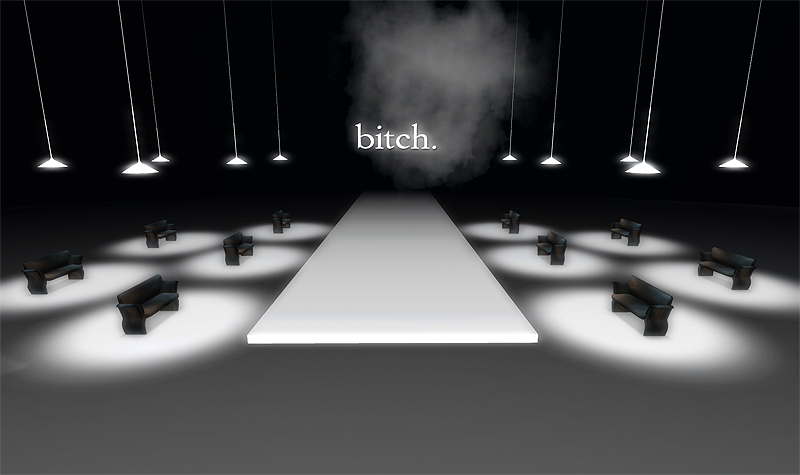
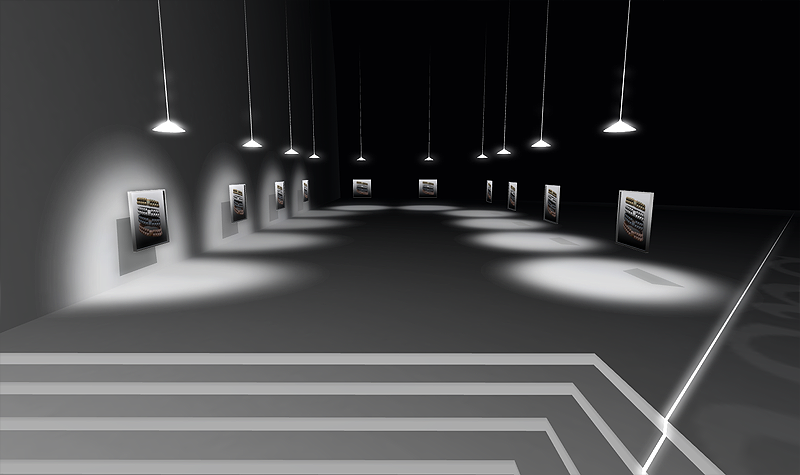
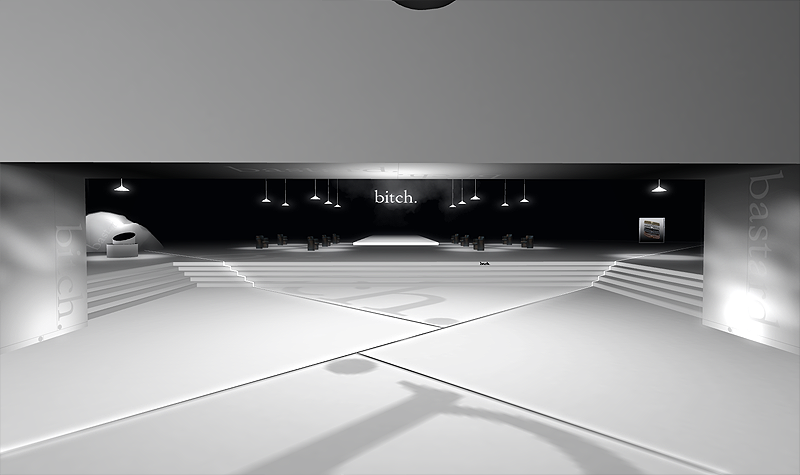
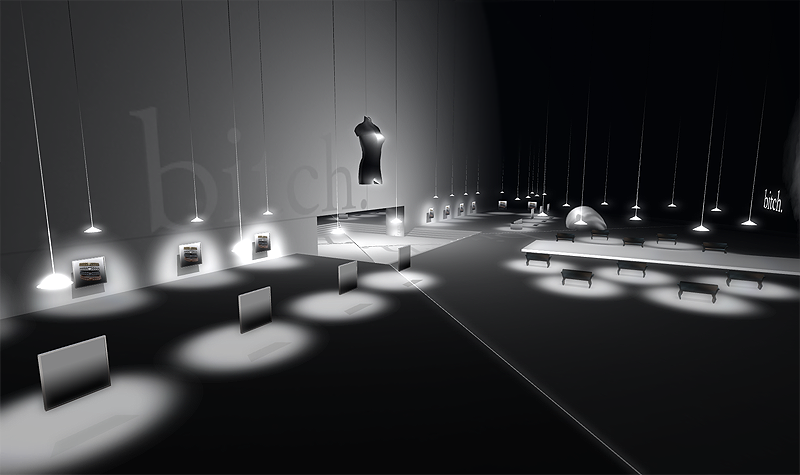
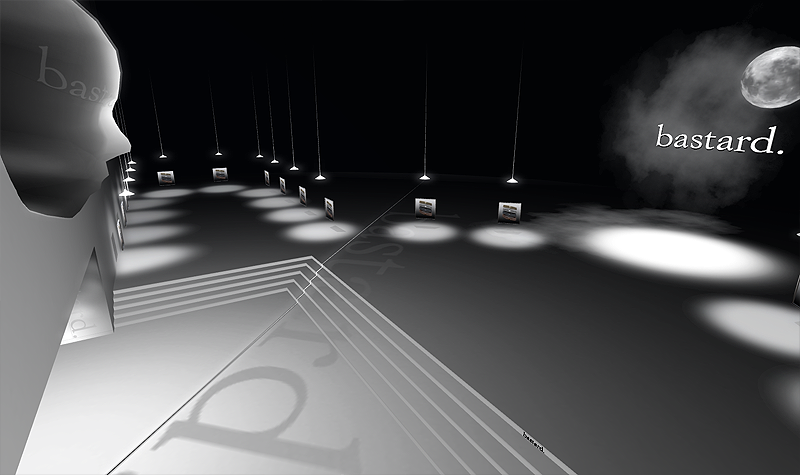
In returning from that therapy, I realized I needed to get back to the joy and simplicity of designing which brought me to SL in the first place. I also realized that after 4 years I wanted very much to take a break from doing furniture and houses. In February of this year I decided to do something which I had wanted to do since I started my first shop on the mainland; To design a mens and womens line of clothing and accessories. (In fact, I almost chose that market instead of furnishings!) In sorting out how I could go about this, I realized that it would be best to separate this new product line from Rustica completely, rather than incorporate it into the castle and existing products. Thus I created a completely new line, and a new retail location which will be far above the castle on the Rustica sim. The mens label is called bastard and the womens label is called bitch; you can find the blog for them here: http://bitchbastard.blogspot.com

The Runway

Rest assured I have not stopped producing items for Rustica. Indeed, I have several large projects already in progress. This is simply a much needed change of pace, something to refresh my work and recharge my creativity. Designing houses is often a very lengthy process, and I wanted to try something that allows me to create at a faster rate and see results in a more timely manner. This will, hopefully, be good for all my work and reflect in any items I design. It has already had a profound effect on me. This new store, the new market, and the inclusion of a new type of tool (mesh) is a radical departure for me, and already has had an excellent impact on me personally as a creative individual.

Item vendor spotlights

As you can see from the pictures of the new store, it is a radical departure from the experience one has as a visitor to Rustica, almost to the point of being an opposite; The castle encourages you to explore, to wander the many rooms, floors and tunnels. The clothing store, however, is a graphic and minimalist environment designed to allow for a low-lag, quick-rezzing visit where you are presented with space and depth, almost no store at all. It uses light and shadow to define the space, rather than heavy architectural sculpts and textures. The focus is on easily accessing the items you want to find in a visually dynamic space.

The center/landing point

The introduction of mesh has had a profound impact on the types of items I want to present. Though I have been part of the mesh beta program since prior to my experiments in Bluemars, I have been primarily focused on learning how to use it for the last several months. I had intended to introduce a variety of mesh clothing items in the new store. Unfortunately, due to the limitations of mesh as a worn object for the initial release, I will only be producing a limited amount of mesh clothing. It is impossible, because of the lack of adjustment
capability, to provide a product which I feel confident in supplying to my customers; It requires you to adjust YOUR shape to IT, rather than it being able to conform to your existing shape. At a later date LL has mentioned the possibility of including some type of deformer system to allow for customization of purchased mesh clothing and avatars, but it will not be included in the initial release. If you are interested in this problem at all, please consider adding your vote to the JIRA which I created requesting a mesh deformer. It has much more information on this problem, and your vote can help! https://jira.secondlife.com/browse/CTS-693

Bitch is on one side...

...bastard is on the other.

I want to say thank you to the many friends and customers who continue to support us; Without you, I could not have come to this point and could not do what I do. This has been a very hard year with so many closings, so many leaving SL. Rustica, however, is still here, still growing and there is much to come in the coming months. I am very optimistic about the future of SL, my personal future in it, and the many interesting things which are coming to SL this year, including the possibility of a tablet-based connection! Onward and Upward!